How We Fixed a Light Short-Circuit and Ceiling Lighting Fault in a Dubai Marina Apartment
A real electrical services job we completed in Dubai Marina.
Electrical problems tend to get put off longer than they should. A flickering light or a fixture that's stopped working isn't dramatic enough to feel urgent — until it is. When a customer in Dubai Marina contacted us about a light short-circuit combined with ceiling lighting that needed fixing, the priority wasn't just getting the lights back on. It was doing that properly, safely, and without turning the ceiling into a construction site in the process.
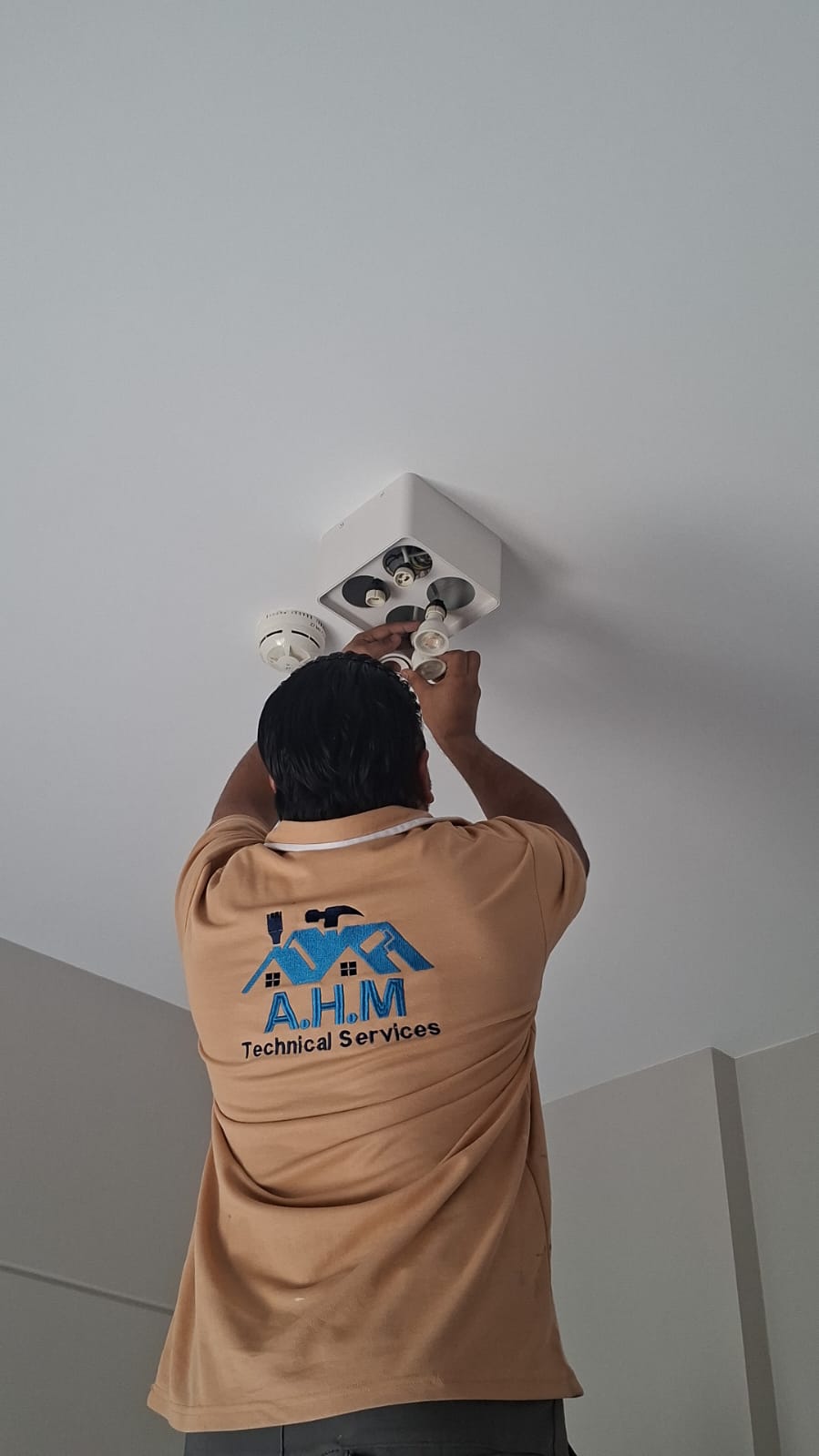
Electrical & Ceiling Lighting Repair in Dubai Marina
The Problem
A customer in Dubai Marina contacted our team for electrical work involving a light short-circuit issue and ceiling lighting that needed fixing. The priority was to resolve the electrical problem properly while keeping the ceiling and surrounding area neat and avoiding unnecessary mess during the work.
What We Did
Our electrical team inspected the lighting and electrical connections to identify the issue before carrying out the repair. We worked carefully on the affected lighting and ceiling fixtures and made sure everything was functioning properly afterward. We also kept the work area clean throughout the process and completed the work efficiently without leaving unnecessary mess behind.
The Outcome
The customer was satisfied with both the quality of the electrical work and the way our team handled the job. He specifically mentioned that the work was clean, neat and professional, and that our team arrived on time and completed the work efficiently. He also appreciated the team's technical knowledge, polite attitude and reasonable pricing, and said he would recommend our team to others.
“Their work was very clean and well-done, and everything looked neat and professional.”
— Baran M., Dubai Marina
Why Electrical Faults Deserve More Urgency Than They Usually Get
A short circuit happens when electrical current takes a path it isn't supposed to — often because insulation on a wire has worn through, a connection has loosened, or a fixture itself has developed a fault. The immediate symptom might just be a light that flickers, trips a breaker, or stops working altogether, which is easy to write off as a minor annoyance.
The reason it deserves more attention than that is what's happening at the fault itself. A short circuit generates heat at the point of the fault, and depending on the wiring, the load, and how long it's left unaddressed, that heat is a genuine fire risk — not a hypothetical one. It's one of the more common causes of electrical fires generally, precisely because it so often starts as something that looked minor.
The Job
Our electrical team inspected the lighting and the surrounding electrical connections to identify the actual issue before touching anything — with a short-circuit fault, working out exactly where the problem originates matters more than moving fast, since guessing wrong means opening up the wrong section of ceiling.
Once the fault was identified, our team worked on the affected lighting and ceiling fixtures and confirmed everything was functioning properly before calling the job done. Because the work involved the ceiling directly, we were also careful to keep the area clean throughout rather than leaving the customer with a mess to deal with once the electrical side was sorted.
The customer was clear afterward that both things mattered to him — not just that the fault was fixed, but that the process of fixing it didn't leave the ceiling and surrounding area looking like a job site. "Their work was very clean and well-done, and everything looked neat and professional," he told us. He also mentioned our team's technical knowledge, polite attitude, and reasonable pricing specifically, and said he'd recommend us to others.
How We Diagnose an Electrical Fault Before Opening Anything
Ceiling electrical work is disruptive by nature, so the diagnostic step before any cutting or opening matters more here than in most trades. Our approach typically involves isolating the affected circuit safely first, then testing connections methodically — checking the fixture itself, the wiring feeding it, and the connection points in between — rather than assuming the fault is wherever the symptom happens to show up.
That distinction matters for the same reason it does with hidden plumbing leaks: the visible symptom and the actual fault aren't always in the same place. A flickering light near a ceiling fixture can be caused by the fixture itself, a loose connection a meter away, or a fault further back in the circuit. Skipping the diagnostic step and just replacing the fixture sometimes fixes the symptom temporarily while leaving the actual fault in place.
Signs of an Electrical Problem You Shouldn't Ignore
A few warning signs are worth acting on quickly rather than waiting to see if they get worse:
- A light or outlet that flickers, especially if it happens consistently rather than once.
- A breaker that trips repeatedly on the same circuit.
- A burning smell near a switch, outlet, or ceiling fixture, even faint.
- Discoloration or scorch marks around a switch plate or outlet cover.
- A switch or fixture that feels warm to the touch.
- Buzzing or crackling sounds from a fixture or panel.
Why Building Age Changes the Risk
Dubai Marina has a genuine mix of building ages, and that matters more for electrical work than it does for most other trades. Wiring installed to an older standard, or wiring that's been through multiple fit-out changes over the years as different tenants renovated their units, is more likely to have a connection that's degraded or a fixture that was never quite matched to the circuit feeding it. None of that is visible from inside a finished apartment — it only shows up once something like a flickering light or a tripped breaker forces the question.
That's not a reason to worry about every older building, but it is a reason to take early warning signs a bit more seriously in a unit that's changed hands or been renovated multiple times, versus a newer build where the original wiring is more likely to still be exactly as installed.
Mistakes We'd Steer You Away From
A few habits we'd genuinely recommend against, even though they're common:
- Resetting a tripped breaker repeatedly without finding out why it tripped — a breaker tripping is it doing its job, not a fault in the breaker itself.
- Replacing a fixture or bulb and assuming that resolves a flickering issue, without checking whether the flicker returns.
- Leaving a burning smell or warm switch 'to keep an eye on it' rather than getting it inspected the same day.
- Attempting to open a ceiling fixture or panel without cutting power to the circuit first.
Frequently Asked Questions
Is a flickering light always a serious problem?
Not always — sometimes it's a loose bulb or a cheap dimmer switch. But because it can also be an early sign of a wiring fault, it's worth having it checked rather than assuming it's minor, especially if it's a new or worsening pattern.
Will fixing a ceiling electrical fault mean cutting open my ceiling?
Sometimes, but not always — it depends on where the diagnostic work points to. Our process is built around narrowing that down before any opening happens, and being upfront with you about what's involved before we start.
How quickly should I get an electrical fault looked at?
Sooner than feels necessary. Electrical faults don't tend to resolve themselves, and the risk profile — heat, and in the worst case, fire — means it's not a repair worth deferring the way you might defer a cosmetic issue.
Do you clean up after electrical and ceiling work?
Yes — this job is a direct example of that being a priority, not an afterthought. We keep the work area contained and clean throughout, not just at the end.
More Recent Jobs
Get Fast, Professional & Affordable Technical Services in Dubai
Don't let technical issues disrupt your day. Contact us now for immediate assistance from our expert team.
 WhatsApp Us