How We Fixed a Hidden Pipeline Leak in a Dubai Marina Apartment
A real plumbing services job we completed in Dubai Marina.
When Jennifer K., a resident of a high-rise apartment in Dubai Marina, first noticed the signs of a water leak, she did what most people would do: she called a plumber. Then another. Then another. By the time she reached out to AHM Technical Services, she had already been through multiple plumbing companies, each one visiting, poking around, and leaving without actually finding where the water was coming from.
That's a more common story than most homeowners realize, especially in Dubai Marina's dense high-rise towers, where the plumbing that actually causes a leak is rarely the plumbing you can see. This is the story of that job — what made it hard, what our team did differently, and what it means if you're dealing with a leak of your own.
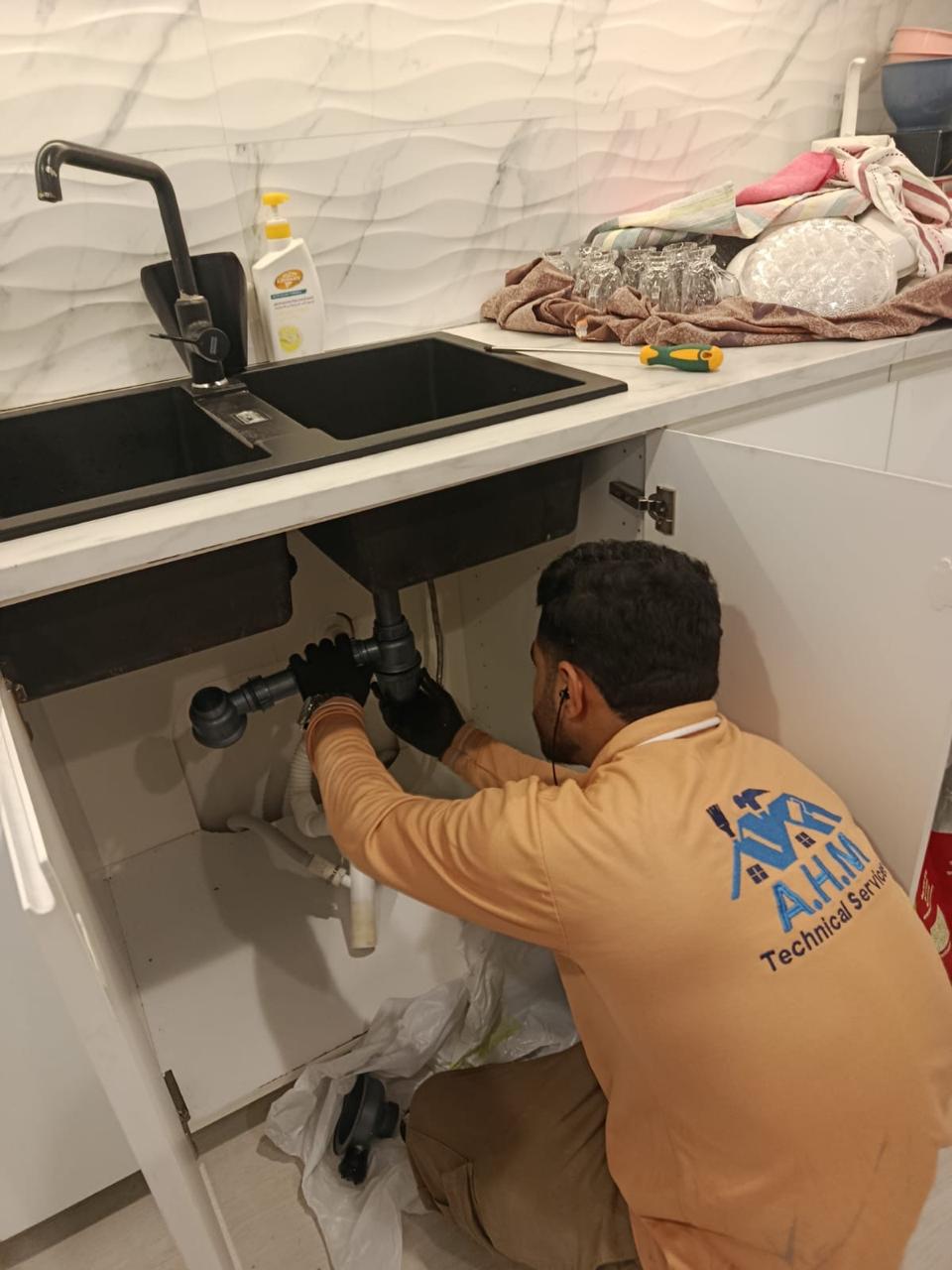
Pipeline Leakage Repair in a Dubai Marina Apartment
The Problem
A customer in Dubai Marina contacted us after dealing with a pipeline leakage in her apartment. She had already called multiple plumbing companies before us, but none of them could properly identify where the leak was coming from — each visit just meant more waiting with the problem still unresolved. She needed someone who could actually find the source and fix it properly.
What We Did
Our plumbing team visited the apartment and worked through the pipeline and surrounding area systematically to locate the actual source of the leak. We identified it and carried out the repair without putting the customer through another lengthy inspection process. Once the repair was done, we checked the area again to confirm the leak was fully resolved.
The Outcome
The customer, Jennifer K., was glad we were able to find the leak quickly after several other companies had already been out to look at it without success. She's since contacted us again for additional plumbing work at another apartment, and told us she'd be using our team for future plumbing, painting, and electrical work — and recommending us to friends in Dubai.
— Jennifer K., Dubai Marina
Why Hidden Leaks Are So Common in Dubai Marina High-Rises
Dubai Marina's residential towers were mostly built within the same construction boom, using similar layouts: bathrooms and kitchens stacked vertically between floors, sharing common risers and wet walls with the units above, below, and sometimes beside them. That's efficient for construction, but it means a huge amount of the plumbing in any given apartment isn't inside that apartment at all — it's buried inside a shared wall, behind tiled surfaces, or boxed in above a false ceiling.
That matters because it changes what a leak actually looks like from the inside of your home. Water doesn't necessarily show up near where the pipe actually failed. It can travel along a slab, follow a conduit, or seep through a wall cavity for meters before it ever becomes a damp patch, a bubbling paint spot, or a mysterious smell. A technician who only looks at where the symptom appears — rather than tracing the system itself — is often looking in the wrong place entirely.
Add to that the water pressure booster pumps most Marina towers rely on to push water up dozens of floors, and even a small weak point in a joint or fitting can turn into a real leak faster than it would in a low-rise villa with gravity-fed pressure.
Why So Many Plumbers Couldn't Find It
By the time Jennifer called AHM, she'd already had several companies out to look at the problem. This isn't a knock on any specific competitor — it's a pattern we see often enough to talk about openly. A lot of call-out plumbing visits in Dubai are priced and structured around a quick fix: show up, look at the obvious spot, patch what's visible, and move on. That works fine for a dripping tap or a visible pipe joint. It doesn't work for a leak whose source isn't where the damage shows up.
Properly finding a hidden leak takes a process, not a glance. It means isolating sections of the plumbing system one at a time, checking whether the water meter keeps moving with everything shut off, and being willing to open up or test areas that aren't the 'obvious' spot — which takes more time on site than a lot of quick-visit call-outs are built for. When that process gets skipped, the result is exactly what Jennifer experienced: multiple visits, no answer, and the leak still there.
The Job: What Happened When Our Team Got the Call
Our plumbing team went into this job already knowing it wasn't going to be a five-minute fix — Jennifer had made that clear from the start, and the history of failed visits told its own story. Rather than starting from where the damage was visible, our technicians worked through the pipeline and the surrounding area systematically, section by section, to actually trace the source of the leak instead of guessing at it from the symptom.
That systematic approach is really the whole difference. It's slower than a quick look, but it's the only way to reliably separate 'where the water is showing up' from 'where the water is actually coming from' — which, in a high-rise apartment with shared walls and concealed risers, are very often two different places.
Once the actual source was identified, our team carried out the repair directly, without sending Jennifer through another round of inspection visits or guesswork. After the repair, we didn't just pack up — we checked the area again to confirm the leak was fully resolved, not just quieter or slower.
Our Process for Diagnosing Hidden Leaks
While every job is different, this is broadly how our plumbing team approaches a leak that isn't visible or obvious:
- Confirm it's actually a leak and not condensation, AC drainage, or a one-off spill — this rules out false alarms before any invasive work starts.
- Isolate sections of the plumbing system to narrow down which zone the water is coming from, rather than opening walls at random.
- Check the water meter with all fixtures shut off — if it's still moving, that confirms an active leak somewhere in the isolated section.
- Use moisture readings and a careful visual inspection of walls, ceilings, and floors to narrow the search further before any cutting or opening.
- Only open up the specific access point needed once the source is reasonably well narrowed down — not the whole wall.
- Repair the actual fault, then re-test the system under normal pressure to confirm the leak is gone, not just reduced.
Signs You Might Have a Hidden Leak
Most hidden leaks don't announce themselves with a puddle. If you're noticing any of the following, it's worth getting it checked before it turns into a bigger repair:
- A noticeably higher water bill with no obvious change in usage.
- A damp patch, discoloration, or bubbling paint on a wall or ceiling — especially near a bathroom or kitchen wall shared with a neighboring unit.
- A musty smell in a specific room that doesn't go away with ventilation.
- The sound of running water when every tap in the home is off.
- Your water meter still ticking over after you've shut off every fixture in the apartment.
What This Means If You're in Dubai Marina
If you live in a Dubai Marina tower and you're dealing with any of the signs above, acting early matters more than it might seem to. Because so much plumbing in these buildings is shared between units, a leak that sits unresolved for weeks doesn't just risk damage to your own apartment — it can affect the ceiling of the unit below or the shared wall of the unit next door, which turns a plumbing job into a building-management and insurance conversation as well. The longer a slow leak runs, the more of that spreads: what starts as a small damp patch behind a cabinet can become a mold problem, a warped floor, or a dispute with a downstairs neighbor over ceiling damage.
It's also worth being upfront with whoever you call in: ask how they plan to actually locate the leak, not just how quickly they can come out. A technician who talks through isolating sections and testing the meter is telling you they have a process. A visit that jumps straight to 'let's open this wall and see' usually doesn't — and in a shared high-rise wall, an untargeted opening can mean more demolition than the job actually needed.
Preventing the Next Leak
Most hidden leaks in apartments like Jennifer's aren't caused by one dramatic failure — they're the result of small weaknesses that build up over years: a fitting that was never fully seated, a joint that's been under constant booster-pump pressure since the building was handed over, or age-related wear in pipework that's never been inspected because it's never been visibly a problem. None of that is something a resident can see or fix themselves, but there are a few things that reduce the odds of it catching you off guard.
- If your apartment is in an older tower, ask your building management whether the risers and shared plumbing have had any recent inspection — not just your unit's fixtures.
- Don't ignore a small water bill increase as 'probably nothing.' It's one of the earliest and most reliable signals of a leak that hasn't shown physical damage yet.
- If you notice a damp smell or discoloration even once, even if it seems to dry out on its own, get it looked at. Leaks are rarely constant — they can be intermittent depending on usage and pressure.
- When booking any plumbing work, ask what happens if the first fix doesn't resolve it. A contractor confident in their process will have a clear answer.
What to Expect If You Book a Leak Detection Visit With Us
We'd rather set expectations upfront than have you find out halfway through a job. When you call about a suspected leak, the first thing we'll do is ask what you're actually seeing — where, how long it's been happening, whether it's constant or intermittent, and what's already been tried. That's not just small talk; it shapes how our technician approaches the visit and saves time once they're on site.
On the day, the visit starts with the same isolation-and-testing process described above, not an immediate assumption about where to cut. If the source turns out to be somewhere that needs opening a wall, ceiling, or floor, we'll walk you through what that involves and what it will cost before any of that work starts — not after. Jobs like Jennifer's, where the leak is genuinely hidden, understandably take longer than a five-minute fix; we'd rather take the time to get it right the first time than have you back on the phone with us, or another company, two weeks later.
Once the repair is done, we test the system again under normal use rather than just visually checking the repaired spot — the point isn't just that it looks fixed, it's that it stays fixed. And if you notice anything unusual in the days after, we want to hear about it rather than have you wonder whether it's worth calling again.
Frequently Asked Questions
How much does leak detection cost in Dubai?
It depends on how accessible the suspected area is and how much isolation and testing the job needs — a leak near a visible fixture is a different job from one buried in a shared riser wall. Call us with what you're seeing and we'll give you a clear estimate before any work starts.
Can a hidden leak be fixed without breaking open the whole wall?
In most cases, yes. The isolation and testing process is specifically there to narrow the source down to a small area before any opening happens — the goal is a targeted access point, not demolition.
What if I've already had other plumbers out and they couldn't find it?
That's a more common starting point for us than you'd think, including on this exact job. Tell us what's already been tried so we're not repeating the same checks, and we'll take a systematic pass through the system from there.
How do I know if it's actually a leak and not something else?
Common look-alikes include AC condensation drainage, a one-off spill that hasn't fully dried, or humidity buildup in a poorly ventilated room. If it's persistent, growing, or paired with a rising water bill, it's worth having it checked rather than assuming.
More Recent Jobs
How We Fixed a Light Short-Circuit and Ceiling Lighting Fault in a Dubai Marina Apartment
Painting Services · Dubai MarinaHow We Repainted a Dubai Marina Apartment, On Schedule From Start to Finish
Painting Services · Business BayHow We Painted an Apartment at Paramount Towers, Business Bay
Get Fast, Professional & Affordable Technical Services in Dubai
Don't let technical issues disrupt your day. Contact us now for immediate assistance from our expert team.
 WhatsApp Us