How We Repaired a Water Heater at International Business Tower, Business Bay
A real water heater repair & installation job we completed in Business Bay.
An office at International Business Tower in Business Bay had a water heater in the corridor that needed attention. It's a small piece of equipment that's easy to ignore right up until it stops working — and in an active office, a plumbing job isn't just about the fix itself. It's also about doing that fix without turning a working day upside down for everyone walking past.
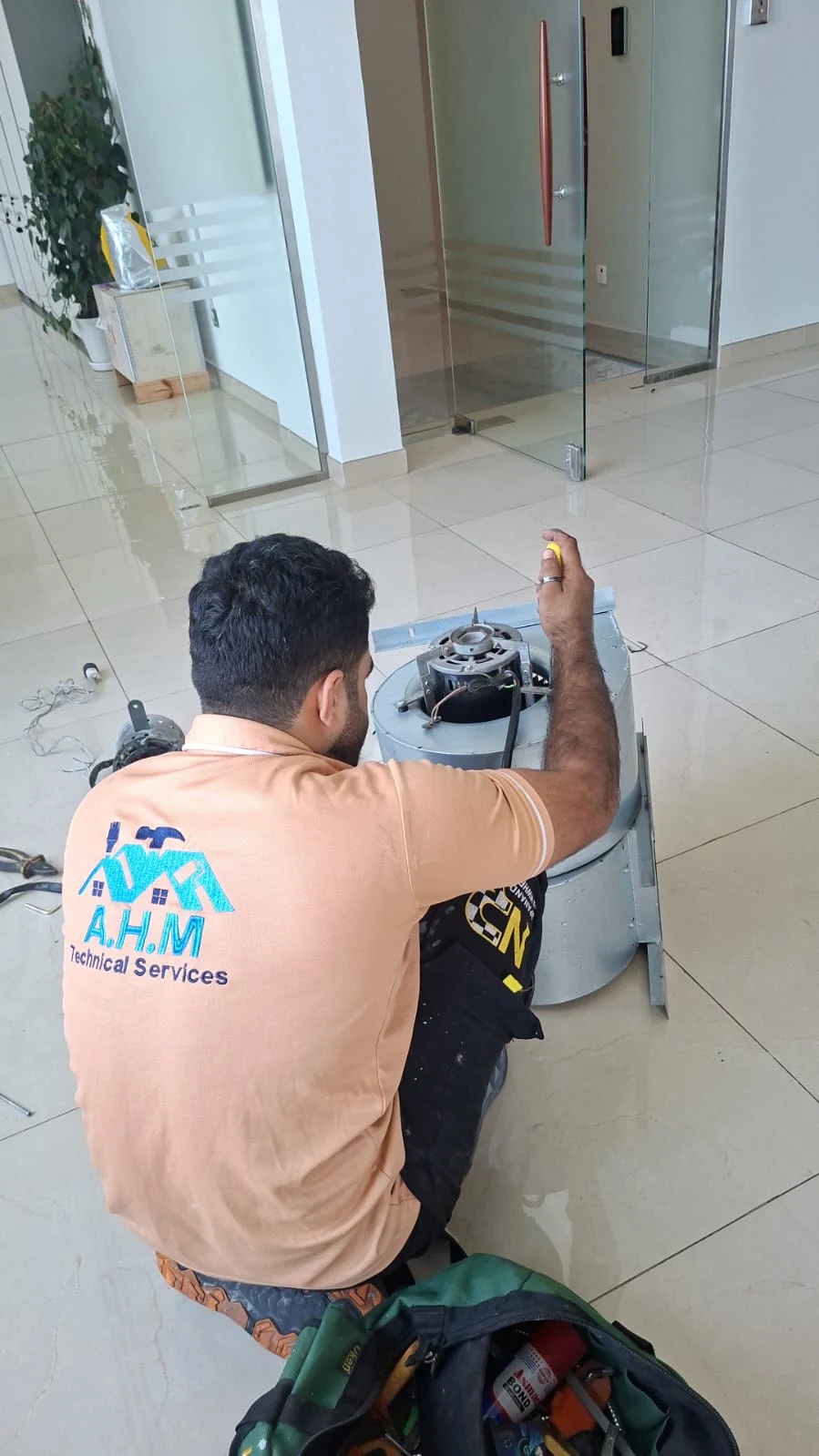
Water Heater Repair & Installation at International Business Tower
The Problem
An office at International Business Tower in Business Bay required plumbing work for a water heater located in the office corridor. The existing water heater needed attention, and the work had to be carried out carefully because the installation area was part of an active office space.
What We Did
Our plumbing team inspected the existing water heater and its plumbing connections to understand what needed to be repaired or replaced. We carried out the required repair and installation work, paying particular attention to the water connections and surrounding area. Once the work was completed, we tested the water heater and checked the connections to make sure everything was working properly. Because the work was being done in an office corridor, we also kept the area organized and avoided leaving unnecessary mess behind.
The Outcome
The water heater work was completed successfully, and the system was tested before our team left the site. The customer was able to have the water heater properly repaired and installed without unnecessary disruption to the office area.
— Unais K., Business Bay
The Job
Our plumbing team was called out to inspect a water heater serving the corridor of an office at International Business Tower. Because the unit sits in a shared, active part of the office, the brief wasn't only 'fix the water heater' — it was 'fix it without disrupting the people working around it.'
We started by inspecting the existing water heater and its plumbing connections to understand exactly what needed repair or replacement, rather than assuming the fix based on the initial symptom alone. From there, we carried out the required repair and installation work, paying close attention to the water connections and the surrounding fittings. Once that was done, we tested the unit and checked every connection before considering the job finished — not just switched on.
Throughout the visit, because the corridor was part of a live office space, our team kept the work area organized and avoided leaving mess behind. The result: the water heater was repaired and tested with no unnecessary disruption to the office.
Why Water Heaters Wear Out Faster in Dubai
Water heaters in Dubai generally have a harder life than the same equipment would in a lot of other climates, for a fairly simple reason: the water supply here is hard, meaning it carries a higher mineral content than what many heating elements and tanks are designed around long-term. Over time, that mineral content deposits itself inside the tank and around the heating element as scale — a chalky buildup that insulates the element from the water it's supposed to be heating.
That has two effects. First, the unit has to work harder and longer to reach the same temperature, which shortens the life of the heating element. Second, scale that settles at the bottom of the tank can eventually affect the tank lining itself, which is usually where the slow leaks and corrosion that end a water heater's life actually start. None of this is unique to office buildings — it happens in villas and apartments too — but a heater in continuous or heavy-use commercial settings tends to hit that wall sooner than one used lightly in a single household.
Common Water Heater Problems We're Called Out For
Most water heater call-outs fall into a fairly small set of recurring issues:
- No hot water at all — often a failed heating element or a tripped thermostat, though it can also be electrical.
- Water that's warm but never properly hot — usually a sign the element is partially failed or heavily scaled.
- Discolored or metallic-tasting water — typically a sign of internal corrosion, which is a strong signal the tank itself is aging out.
- Water pooling at the base of the unit — this needs attention quickly, since it can mean the tank itself has started to fail rather than just a loose fitting.
- A popping or rumbling sound during heating — almost always scale buildup at the bottom of the tank.
- The pressure relief valve dripping intermittently — sometimes normal, but worth having checked rather than assumed.
Repair or Replace? How We Actually Decide
This is a genuinely common question, and the honest answer is that it depends on the age of the unit and what's actually failed, not on a fixed rule. A heating element, thermostat, or a failed connection is usually a straightforward repair regardless of the unit's age — that's what this Business Bay job was. Those parts fail somewhat independently of the tank itself, and replacing them is typically far cheaper than replacing the whole unit.
Tank-level problems are a different conversation. If the tank is leaking from the body itself, rather than from a fitting or valve, that's generally not something that gets repaired — the tank lining has broken down, and a patch isn't a long-term fix. At that point, and especially if the unit is already several years old, replacement is usually the more honest recommendation, even if it's the less convenient answer in the moment. We'll always tell you which situation you're in before doing the work, not after.
Working Around an Active Office
Jobs like this one come with a constraint that a home repair usually doesn't: the space doesn't stop being used while the work happens. People are walking past, meetings are going on a few doors down, and the corridor still needs to look presentable at the end of the day regardless of what was involved in getting there.
Practically, that changes how we approach the visit — being mindful of timing, keeping tools and parts contained rather than spread across the corridor, and cleaning up as we go rather than leaving it for a final pass at the end. It's a small thing, but it's usually the difference between an office feeling like it had 'a repair happen' versus feeling like it had 'a disruption.'
It also changes how we communicate. On a residential job, we're usually speaking with the one person who lives there. On a job like this, the water heater might serve dozens of people who have no idea a repair is even happening — so the work has to be quiet, contained, and finished cleanly enough that most people walking past never notice it happened at all.
How Long Should a Water Heater Actually Last?
This comes up often enough to answer directly: most tank water heaters are built for somewhere in the range of 8 to 12 years of service, though that range shrinks in hard-water conditions like Dubai's if the unit has never been flushed or serviced. Past that point, the question shifts from 'is this worth repairing' to 'how much longer do I want to keep repairing it' — because the tank itself, not just its parts, is what eventually determines the unit's real lifespan.
In a commercial setting specifically, it's worth tracking roughly how old the unit is rather than waiting for it to fail outright. A water heater that quietly stops working in a corridor on a Thursday afternoon is a much bigger inconvenience than one that gets proactively replaced on a planned maintenance visit.
If You Manage an Office in Business Bay
Business Bay has a mix of older and newer commercial towers, and International Business Tower is a fairly typical example of the kind of building where shared utilities like corridor water heaters get maintained reactively — nobody thinks about them until they stop working. If you're responsible for facilities in a building like this, it's worth treating water heaters the same way you'd treat any other piece of shared building equipment: with a rough sense of its age and a plan for when it'll need attention, rather than waiting for a complaint.
That's a small operational habit, but it's the difference between a planned, quiet repair like this one and an unplanned one that interrupts a working day with no warning.
Getting More Life Out of Your Water Heater
A few habits make a real difference to how long a water heater lasts, particularly given Dubai's water hardness:
- Have the tank flushed periodically to clear settled scale before it builds up enough to affect the heating element or the tank lining.
- Don't ignore a change in sound, color, or how quickly water heats up — these are usually early signals, not sudden failures.
- If the unit serves a high-traffic area like an office pantry or shared corridor, treat it as higher-usage equipment and have it checked more often than you would a low-use residential unit.
- Address a dripping pressure relief valve rather than living with it — it's a cheap fix now and a bigger problem later.
Frequently Asked Questions
How long does a typical water heater repair take?
For an element, thermostat, or connection repair like this one, it's usually a same-visit job. Tank replacement takes longer, mainly due to draining, disconnecting, and re-plumbing the new unit.
Can you carry out repairs without disrupting a working office?
Yes — this job is a good example. We work around occupied spaces regularly and keep the area tidy and contained throughout, not just at the end.
How do I know if my water heater needs replacing rather than repairing?
The clearest sign is a leak from the tank body itself rather than a fitting, or water heater age past what's typical for the unit. We'll always inspect and tell you honestly which situation applies before recommending either option.
Why does Dubai's water affect water heaters specifically?
The water supply here carries more dissolved minerals than many heating elements are designed around long-term, which leads to scale buildup inside the tank. That's the root cause behind most of the wear we see in water heaters across the city.
Do you service water heaters for offices and commercial buildings, or just homes?
Both. This job at International Business Tower is a commercial example, but the underlying equipment and failure points are largely the same as what we see in villas and apartments — the main difference is working around an occupied space rather than an empty one.
More Recent Jobs
How We Fixed a Hidden Pipeline Leak in a Dubai Marina Apartment
Electrical Services · Dubai MarinaHow We Fixed a Light Short-Circuit and Ceiling Lighting Fault in a Dubai Marina Apartment
Painting Services · Dubai MarinaHow We Repainted a Dubai Marina Apartment, On Schedule From Start to Finish
Get Fast, Professional & Affordable Technical Services in Dubai
Don't let technical issues disrupt your day. Contact us now for immediate assistance from our expert team.
 WhatsApp Us